+91-74988 12711
smile@sanghavidentalclinic.com
-
-
Fulchand House, Canal Rd, Amrai
Baramati, Maharashtra
Contact Info
-
Address
Fulchand House, Canal Rd, Amrai, Baramati, Maharashtra 413102
-
Phone
-
Email
© Sanghavi Dental Clinic & Implant Centre , All Rights Reserved. Powered By Praxis360
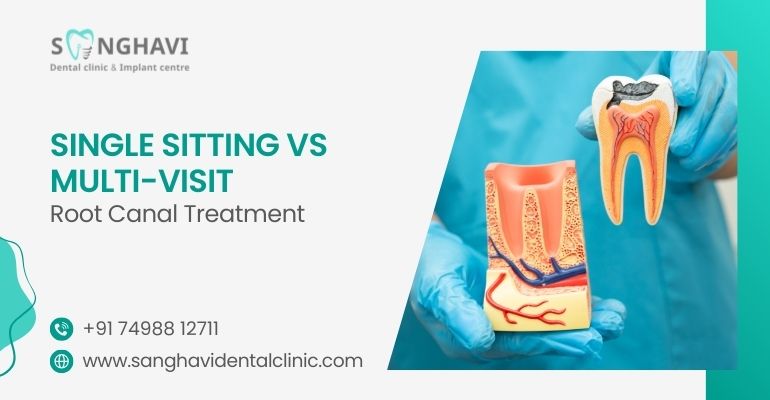
You sit in the dental chair with a tooth that has been bothering you for days. The pain comes and goes, but you know something is wrong. Your dentist recommends a root canal, and suddenly two words stick in your mind: how long?
The thought of multiple appointments spread over weeks feels overwhelming. Your schedule is already packed. The idea of a single visit where everything gets done at once sounds much better. But is it always possible? Does one option work better than the other? These questions run through every patient's mind when facing this procedure.
The truth is that both approaches have their place, and the right choice depends on your specific tooth and situation. If you are considering root canal treatment, understanding the difference between single-sitting and multi-visit options helps you feel prepared and confident. At Sanghavi Dental Clinic & Implant Centre, we explain every step so you know exactly what to expect.
What Happens During a Root Canal?
Before comparing timelines, it helps to understand the procedure itself.
- The infected pulp inside your tooth is removed
- The inner chamber is cleaned, disinfected, and shaped
- The space is filled with a special material
- A crown later protects the restored tooth
Whether done in one visit or multiple, these steps must happen. The difference is how they are spread out over time.
Single Sitting Root Canal: The One Appointment Option
For some teeth, everything can be completed in a single visit.
- The entire procedure takes 60 to 90 minutes
- Cleaning, shaping, and filling happen in one go
- No temporary filling needed between visits
- You leave with the tooth fully treated
- One numbing appointment, one recovery period
This approach works best for teeth with straightforward infection. When the tooth is otherwise healthy, and the infection has not spread, single sitting rct is often possible. Patients love the convenience of walking out.
When Does A Single Sitting Work Best?
Not every tooth qualifies for a one-visit approach.
- Teeth with minimal infection and swelling
- Straightforward root canals, not curved or blocked
- Patients who can tolerate a single appointment
- No pus or abscess requiring drainage
- Good candidates for immediate filling
Your dentist examines your tooth and takes x rays to decide. If the infection is contained and the anatomy is simple, a single sitting rct is a great option.
Multi-Visit Root Canal: The Traditional Approach
Some teeth need more time between steps for proper healing.
- First visit cleans and shapes the tooth
- Canals are disinfected
- Temporary filling covers the tooth
- You return days or weeks later for the final filling
- Allows infection to settle before sealing
This approach has been used successfully for decades. It gives the body time to fight infection between appointments.
When Multiple Visits Are Needed?
Several situations call for spreading treatment over time.
- Large infection with visible swelling
- Abscess or pus that needs drainage
- The complex root anatomy is difficult to clean at once
- Tooth that remains symptomatic after the first visit
- Retreatment of a previously failed root canal
In these cases, rushing to finish in one visit could compromise the outcome. The tooth needs time to respond before being permanently sealed.
The Time Commitment Difference
Understanding the schedule helps you plan your life.
Single Sitting
- One appointment lasting 60 to 90 minutes
- No return visit for the root canal itself
- You may still need a separate crown appointment
- Total treatment time is much shorter
- Back to normal faster
Multi-Visit
- First appointment is 45 to 60 minutes
- Return visit after one to four weeks
- Each visit requires numbing and recovery
- Temporary filling in between
- Crown appointment still needed after
For patients with busy schedules, a single sitting rct offers obvious advantages. But only if your tooth qualifies.
The Comfort Factor
How you feel during and after matters.
Single Sitting
- One recovery period instead of two
- Mild soreness for a day or two, then done
- No dealing with temporary fillings falling out
- Less overall time in the chair
Multi-Visit
- Two separate recoveries, each mild
- Temporary filling may feel strange
- Possibility of discomfort between visits
- More total time in appointments
- May need pain relief between visits
Most patients prefer one recovery if their tooth allows it. But a tooth that needs two visits will feel better in the long run with proper staging.
The Cost Comparison
Money matters in any treatment decision.
- Root canal treatment cost varies by tooth location
- Front teeth cost less than molars
- Single sitting does not cost less than multi-visit
- Both approaches have similar fees
- The complexity drives cost, not the timeline
When considering single sitting rct cost, understand that you pay for the procedure, not the number of visits. A straightforward tooth costs the same whether done in one visit or two. At Sanghavi Dental Clinic & Implant Centre, we provide clear pricing so you know what to expect.
Factors That Affect Cost
Several things influence what you pay.
- Which tooth, the front teeth are simpler
- How many canals need treatment
- Whether retreatment is needed
- Complexity of your root anatomy
- Final crown after the root canal
Your root canal treatment cost includes the tooth's location, the materials used, and the time required to save your tooth. Compared to extraction and replacement, it is almost always the better value.
The Crown Afterward
No matter which approach you choose, a crown usually follows.
- A root canal makes a tooth more brittle
- The crown protects it from breaking
- Placed after healing is complete
- Separate appointment and cost
- Essential for long-term survival
Do not forget this step. A root canal without a crown on back teeth often leads to fracture and tooth loss later.
FAQs
Is a single sitting root canal more painful?
No, the pain level is similar to multi-visit treatment. Both are done under local anesthesia, so you feel nothing during the procedure. Recovery soreness is mild regardless of how many visits it takes.
How long does a single sitting root canal take?
Most single sitting procedures take 60 to 90 minutes, depending on the tooth. Front teeth with one canal are faster, while molars with multiple canals take longer.
Which option has a higher success rate?
Both have excellent success rates when performed correctly. Success depends more on the tooth's condition than on the number of visits. Your dentist recommends the approach most likely to succeed for your specific tooth.
Choosing the Right Path for Your Tooth
Single sitting or multi-visit? The answer is not about which is better overall. It is about which is better for your specific tooth. A straightforward infection in an easy-to-reach tooth may do well in one visit. A complex infection with swelling and difficult anatomy needs time and medicine between appointments to fully heal. Both approaches lead to the same destination: a saved tooth that serves you for years to come.
At Sanghavi Dental Clinic & Implant Centre, we take the time to figure out which path is right for you. We look at your X-rays, assess your symptoms, and recommend based on evidence, not convenience. When you need root canal treatment, you deserve a plan designed for your unique situation. Whether that plan involves one appointment or two, the goal is always the same: your long-term oral health. Trust the process, ask your questions, and move forward knowing you are in good hands.