+91-74988 12711
smile@sanghavidentalclinic.com
-
-
Fulchand House, Canal Rd, Amrai
Baramati, Maharashtra
Contact Info
-
Address
Fulchand House, Canal Rd, Amrai, Baramati, Maharashtra 413102
-
Phone
-
Email
© Sanghavi Dental Clinic & Implant Centre , All Rights Reserved. Powered By Praxis360
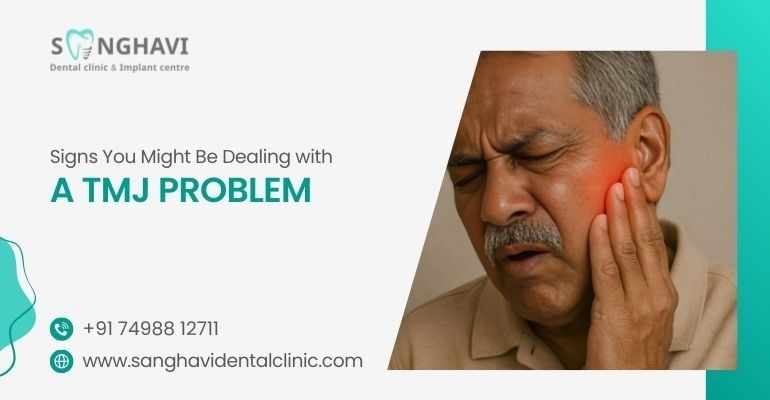
That Annoying Jaw Click… Could It Be More Than Just a Quirk? Ever catch yourself wincing when you yawn too wide? Or maybe your jaw makes a clicking sound every time you chew something a bit tougher than dal-chawal? Most of us brush off jaw issues, thinking they’ll go away on their own. But sometimes, your jaw is actually trying to tell you something. And no, it’s not asking for more pani puri.
At Sanghavi Dental Clinic in Baramati, we see a fair share of these not-so-obvious jaw problems. What’s tricky is that TMJ (temporomandibular joint) disorders can show up in all sorts of sneaky ways, not just in your jaw.
If you’ve been searching for TMJ treatment in Baramati, this blog might just be the helpful friend you didn’t know you needed.
What Exactly Is TMJ?
TMJ stands for the temporomandibular joint, the hinge connecting your jaw to your skull. You’ve got one on each side of your face, and you use them every time you chew, talk, yawn, or even make those dramatic expressions while watching a suspense thriller.
When this joint gets irritated, inflamed, misaligned, or just plain overworked, you may develop what’s known as TMJ disorder (sometimes called TMD).
Now, here's where it gets interesting (and sometimes confusing): the signs of TMJ disorder aren’t always just in your jaw.
1. Clicking or Popping Sounds in Your Jaw
This is one of the most common signs people notice, but often ignore. If your jaw makes a click-click sound when you open or close your mouth, or while chewing, it could mean your TMJ isn’t moving as smoothly as it should.
Pro Tip: If the clicking is painless and not causing any trouble, you may be okay for now. But if there’s pain, locking, or difficulty moving the jaw, it's time to see Dr. Rohit Sanghavi.
2. Jaw Pain or Tightness - Especially in the Morning
Waking up with a sore jaw? It could be a sign that you’re grinding or clenching your teeth at night, something called bruxism. This puts pressure on the TMJ and can lead to discomfort, headaches, and even cracked teeth.
It’s sneaky because most people don’t even realize they’re doing it in their sleep.
3. Headaches That Just Won’t Quit
TMJ-related headaches often feel like tension headaches or even migraines. They usually start near the temples, around the ears, or at the base of the skull, and can radiate to the forehead.
If you’ve tried every “nuskha” from ginger tea to cold compresses and your headache still lingers, the issue might be your jaw, not your head.
4. Ear Troubles Without Any Infection
Some folks with TMJ disorders experience:
A feeling of fullness in the ear
Ringing sounds (tinnitus)
Earaches with no sign of infection
That’s because the TMJ is located right next to your ears, and inflammation or strain can affect nearby nerves and muscles.
5. Difficulty Opening Your Mouth Fully
If it suddenly feels like your jaw has a limit switch, or worse, gets locked, that’s a red flag.
You might find it tough to eat a big bite of vada pav, or you feel like your jaw might “stick” when yawning.
This could be due to disc displacement inside the joint or muscle spasms caused by chronic tension.
6. Facial Pain or Tired Cheeks
This one can be easily confused with sinus issues or even stress. If your cheeks or lower face feel sore, tight, or constantly tired, especially after a long, chatty day or a marathon of chewing, TMJ might be the culprit.
7. Uneven or Changing Bite
Notice your teeth not lining up like they used to? Or maybe chewing feels “off”? Changes in your bite can be a side effect of TMJ issues and should definitely be examined. Dr. Rohit Sanghavi can check whether your jaw alignment is shifting and what can be done about it.
So… What Causes These TMJ Troubles?
Good question. TMJ problems can be caused by a mix of things:
- Grinding/clenching your teeth
- Poor posture (yes, your screen-hunched neck can affect your jaw)
- Injury to the jaw or neck
- Arthritis
- Stress (hello, jaw tension)
Sometimes, it’s a combination of the above. That’s why it’s important to get a proper diagnosis and customized TMJ treatment in Baramati from someone who knows the joint inside out, like Dr. Sanghavi.
Why You Shouldn’t Ignore These Signs
TMJ issues aren’t just a minor inconvenience. Left untreated, they can lead to:
- Chronic pain
- Limited jaw movement
- Worn-down teeth
- Sleep disturbances
- Reduced quality of life (try explaining your jaw lock at a wedding dinner!)
Getting early care makes a huge difference. At Sanghavi Dental Clinic, we’ve helped many Baramati residents get their jaw (and comfort) back in line, sometimes with simple night guards, posture correction, or jaw exercises. In more serious cases, more in-depth treatment may be needed.
What Happens During a TMJ Consultation?
When you visit our clinic, here’s how we go about it:
Talk First – We’ll chat about your symptoms, habits, lifestyle, and anything else that could be linked.
- Jaw Check-Up – Dr. Rohit Sanghavi will check your bite, jaw movement, and listen for clicking or grinding sounds.
- Imaging (if needed) – X-rays or scans help us understand the joint structure if things seem more complex.
- Plan Together – We’ll guide you through options. This could include jaw exercises, mouthguards, stress relief techniques, or more advanced care.
Friendly Tip: Bring along a list of symptoms (even weird ones like “ear ringing” or “my jaw clicks when I sing”). It helps paint a fuller picture!
FAQs
1. Can TMJ disorder go away on its own?
Sometimes, if it’s caused by temporary stress or mild grinding, TMJ discomfort can reduce with rest, jaw relaxation, or lifestyle tweaks. But if the symptoms linger for weeks or worsen, it’s best not to wait. Early guidance can save you from bigger discomforts.
2. How is TMJ treatment in Baramati usually done?
At Sanghavi Dental Clinic, we start with the least invasive options, like jaw exercises, night guards, posture advice, and stress relief tips. In more advanced cases, treatments like dental adjustments or referrals for physical therapy may be suggested. Each person’s jaw is different!
3. Is jaw clicking always a sign of a problem?
Not always. Some people have jaw clicks that are harmless. But if the clicking comes with pain, locking, or reduced jaw movement, it’s a sign to book a visit with Dr. Sanghavi and get it checked.
4. Will I need surgery for TMJ issues?
Surgery is very rare and only considered when all other methods haven’t helped. Most people find relief through non-surgical care like splints, stress management, or minor bite corrections.
5. Are home remedies safe for TMJ pain?
Warm compresses, soft food, and avoiding gum chewing can help with minor flare-ups. But for recurring or severe symptoms, self-treatment might delay real help. Always better to get a professional look before things worsen.
Need Help With TMJ Discomfort? Let’s Talk Jaw to Jaw
If you found yourself nodding along (or wincing a little) while reading the signs above, it might be your jaw’s way of saying, “Hey, let’s get this sorted.” And honestly, we’re here for it.
At Sanghavi Dental Clinic, we don’t just poke around and send you off with a list of dos and don’ts. We listen. We chat. We understand. Dr. Rohit Sanghavi is known around Baramati not just for his experience, but for making things simple, clear, and a lot less scary than you imagined.
And if you’ve been googling “TMJ treatment in Baramati” and getting overwhelmed, take a breath. You’ve landed at the right place. We’re just around the corner, and we're always happy to help (jaw sounds and all!).
Book an appointment with us and let’s figure things out together and get your jaw back to moving, munching, and smiling the way it should.