+91-74988 12711
smile@sanghavidentalclinic.com
-
-
Fulchand House, Canal Rd, Amrai
Baramati, Maharashtra
Contact Info
-
Address
Fulchand House, Canal Rd, Amrai, Baramati, Maharashtra 413102
-
Phone
-
Email
© Sanghavi Dental Clinic & Implant Centre , All Rights Reserved. Powered By Praxis360
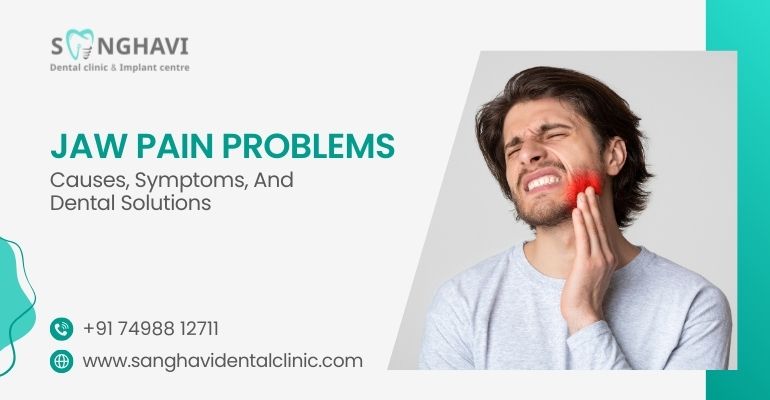
That sudden twinge near your ear when you yawn.
That weird click when you chew.
That low-key ache that makes you avoid crunchy snacks altogether.
Jaw pain has a sneaky way of entering daily life and overstaying its welcome. One day it’s a mild discomfort, the next day you’re googling jaw pain treatment at 2 a.m., wondering why your mouth feels like it’s protesting against basic activities like talking or chewing.
At Sanghavi Dental Clinic, we see this pattern often. Jaw pain isn’t dramatic in the beginning, but it can slowly mess with your routine if ignored. So let’s break it all down calmly, clearly, and without dental terms overloading, what jaw pain actually means, why it happens, and how dental care can genuinely help.
First Things First: What Exactly Is Jaw Pain?
Jaw pain isn’t just “pain in the jaw.” It’s a group of discomforts that can show up in different ways and places:
- Near the ears
- Around the cheeks
- Along the lower face
- Even extending to the neck or head
For some people, it’s sharp and sudden. For others, it’s a dull ache that refuses to leave. And sometimes, it’s not pain at all, just stiffness, clicking sounds, or a jaw that feels oddly stuck.
Most jaw-related discomfort connects to a small but mighty joint called the temporomandibular joint, or TMJ. It’s the hinge that lets your jaw move up, down, and side to side. You use it while talking, eating, yawning, singing, complaining about traffic, basically all day.
When this joint or the muscles around it get irritated, things start feeling… off.
Signs Your Jaw Is Asking for Attention (Politely… or Not)
Jaw pain doesn’t always arrive with flashing warning signs. Sometimes it whispers before it screams. Common symptoms include:
- Clicking jaw pain while opening or closing the mouth
- Jaw pain while chewing, especially harder foods
- A feeling of tightness or fatigue in the jaw
- Headaches that start near the ear
- Ear discomfort without an ear infection
- Jaw locking pain, where the mouth doesn’t open or close smoothly
- Facial soreness after waking up
That awkward moment when your jaw clicks in a quiet room? Yes, that counts too.
Why Does Jaw Pain Happen? (Spoiler: It’s Not Just One Reason)
Jaw pain causes and solutions go hand in hand, but understanding the “why” makes everything easier.
1. Teeth Grinding and Clenching
Many people grind their teeth without realizing it, especially during sleep or stressful days. Over time, this puts serious pressure on the jaw muscles and joint.
Think of it like doing a workout… but for 8 hours straight… without rest.
Note: you can consult your dentist for mouthguards if this is what happens with you.
2. Stress Taking the Front Seat
Long work hours, deadlines, scrolling fatigue, stress shows up in the jaw more often than we expect. Tight jaw muscles are a classic stress response.
3. Bite Problems
If your upper and lower teeth don’t align properly, your jaw works overtime to compensate. This imbalance can slowly irritate the joint.
4. Poor Posture
Yes, that phone scrolling posture matters. Constantly bending your neck forward affects jaw alignment and muscle tension.
5. Past Injuries or Trauma
A fall, accident, or even an old sports injury can alter jaw movement long after the event.
6. Arthritis in the Jaw Joint
Just like knees or fingers, the jaw joint can experience wear and tear over time.
When Jaw Pain Starts Affecting Daily Life
Jaw pain has a habit of creeping into everyday moments:
- Avoiding certain foods because chewing feels uncomfortable
- Talking less during long conversations
- Waking up with facial soreness
- Feeling irritated because your jaw feels “off” all day
This is usually when people start exploring tmj treatment or looking for a dentist for jaw pain treatment who actually listens and explains instead of rushing.
Jaw Pain Treatment: What Dental Care Actually Focuses On
Jaw pain isn’t about quick fixes. It’s about understanding how your jaw moves, rests, and reacts.
Step 1: Understanding Your Jaw Mechanics
A dentist examines:
- Jaw movement
- Bite alignment
- Muscle tenderness
- Joint sounds
Sometimes imaging is suggested to get a clearer picture.
Step 2: Reducing Muscle Strain
This may include:
- Jaw relaxation techniques
- Bite correction guidance
- Night guards for grinding
Step 3: Supporting Natural Jaw Movement
The goal of jaw pain treatment is not to “lock” your jaw into place but to help it move comfortably again, without strain or noise.
Step 4: Addressing Habits
From posture tips to chewing patterns, small daily habits play a huge role.
TMJ Treatment Isn’t Just for “Serious” Cases
There’s a common myth that tmj treatment is only for extreme pain or surgery-level problems. In reality, early care is often simple and preventive.
Treatment may involve:
- Oral appliances to reduce grinding pressure
- Exercises to relax jaw muscles
- Bite adjustments if needed
- Lifestyle guidance that fits real life
No drama. No overwhelming steps.
The Clicks, Pops, and Locks, Should You Worry?
Occasional clicking without pain usually isn’t serious. But when clicking comes with discomfort, limited movement, or jaw locking pain, it’s time to get it checked.
Ignoring it can lead to:
- Increased stiffness
- More frequent headaches
- Reduced mouth opening over time
It is better to get checked now, than to cry later.
Pro Tip
If you catch yourself clenching during stress, try this simple reset:
Place your tongue gently on the roof of your mouth and let your teeth stay slightly apart. It gives your jaw a mini break.
A Very Important (Yet Often Ignored) Detail
Jaw pain isn’t always about pain.
Sometimes it’s:
- Fatigue
- Tightness
- A “heavy” feeling near the ears
These are early signals. Paying attention early makes care smoother and recovery easier.
Something Most People Don’t Realize About Jaw Pain
Before we jump into FAQs, here’s something interesting we often explain at Sanghavi Dental Clinic:
Jaw pain doesn’t exist in isolation.
It’s connected to:
- Your teeth
- Your posture
- Your stress levels
- Your sleep quality
So when jaw pain improves, people often notice fewer headaches, better sleep, and even improved focus during the day. It’s not magic, it’s anatomy finally getting along with itself.
FAQs: Jaw Pain Explained Without the Confusion
1. Can jaw pain go away on its own without treatment?
Mild jaw discomfort caused by temporary stress or overuse can settle down with rest and awareness. However, recurring pain, clicking, or stiffness usually signals an underlying issue. Without proper evaluation, the discomfort may reduce temporarily but return later, sometimes worse. That’s why timely jaw pain treatment helps prevent long-term problems.
2. Is clicking jaw pain always related to TMJ problems?
Clicking sounds often involve the TMJ, but not every click is a disorder. Occasional clicking without pain is common. When clicking is paired with pain, stiffness, or restricted movement, it may indicate disc displacement or muscle strain, which benefits from professional evaluation.
3. Why does my jaw hurt more while chewing?
Jaw pain while chewing usually points to muscle fatigue, joint irritation, or bite imbalance. Chewing increases pressure on the jaw joint, so existing issues become more noticeable during meals, especially with hard or chewy foods.
Thinking About Your Next Step?
If jaw pain has been quietly interrupting your meals, conversations, or sleep, it might be time to listen to what your jaw is trying to say.
At Sanghavi Dental Clinic, we focus on understanding the root of the discomfort and guiding you toward a jaw pain treatment approach that feels practical, comfortable, and realistic for daily life. Whether it’s exploring tmj treatment or simply getting clarity about what’s happening, a calm conversation can make a big difference.
You don’t need to rush or overthink it, just take the first step toward a jaw that moves, rests, and works the way it should.